WELLBEING THAT GOES DEEPER.
Nervous system education for healthier, more resilient workplaces.
We spend a huge portion of our lives at work, and yet, when we talk about workplace wellbeing, we often focus on what people should do to feel better - take breaks, meditate, exercise, sleep more, manage their time - without helping them understand what is happening underneath their stress in the first place.
At Some September, we believe there is another piece of the conversation.
The nervous system.
When people understand how their nervous system responds to pressure, uncertainty, workload, conflict and prolonged stress, they can begin to recognise their own patterns — and develop practical tools to support themselves before they reach breaking point.
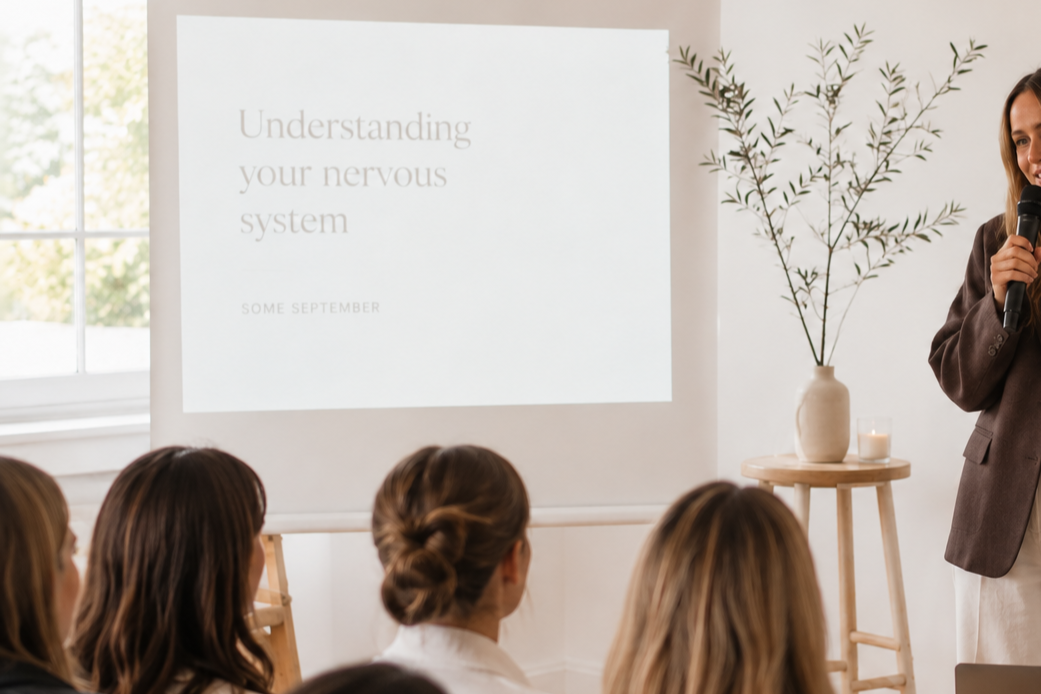
We bring nervous system education into organisations through engaging workshops, talks and employee wellbeing programmes designed to make this knowledge accessible, relatable and genuinely useful in everyday working life.
Burnout rarely begins with burnout, it can begin with constantly being switched on. The inability to mentally leave work at work, feeling responsible for everything, perfectionism, people pleasing, difficulty saying no, running from meeting to meeting without a moment to reset, feeling exhausted but unable to properly rest. Living in a state of urgency for so long that urgency starts to feel normal.
These aren't simply conversations about productivity, instead they are conversations about human beings and their nervous systems.
Our corporate wellbeing sessions help employees understand the physiology behind stress and recognise what fight, flight, freeze and other protective responses can look like in everyday life.
More importantly, we give people realistic tools they can actually use, at their desk, between meetings, before a difficult conversation, after an overwhelming day or during periods of increased pressure.
Corporate workshop topics can include
-
An accessible introduction to the nervous system, stress responses and why we react the way we do under pressure.
How this benefits the workplace:
When employees understand what is happening internally during periods of stress, they are better equipped to recognise their own responses before they escalate. Greater self-awareness can support emotional regulation, clearer communication and a greater ability to navigate pressure, change and challenging situations at work. -
Exploring chronic stress, overwhelm, emotional exhaustion and the patterns that can keep people functioning long after their body is asking them to slow down.
How this benefits the workplace:
Burnout doesn't happen overnight. Helping employees and leaders recognise earlier signs of chronic stress creates opportunities for intervention before someone reaches crisis point. This can support healthier conversations around workload and capacity, encourage earlier help-seeking and contribute to a workplace culture where sustainable performance is valued over simply pushing through. -
Practical nervous-system tools employees can use throughout the working day to move between periods of pressure and recovery.
How this benefits the workplace:
Employees don't necessarily need an hour away from their desk to regulate. Small, practical interventions throughout the working day can help people reset after stressful meetings, transition between tasks and recover following periods of intense focus. Building moments of recovery into the day can support concentration, emotional regulation and more sustainable ways of working. -
Exploring perfectionism, overworking, hyper-independence, people pleasing and the less obvious ways chronic stress can present in high-performing environments.
How this benefits the workplace:
Some of the employees who appear to be coping best may actually be operating under significant internal pressure. Perfectionism, difficulty delegating, constantly saying yes and working beyond capacity can initially look like high performance but they can become difficult to sustain. Understanding these patterns can support healthier performance, delegation, collaboration and conversations about capacity before exhaustion takes over. -
Understanding why boundaries can feel difficult and how greater awareness of our internal responses can support healthier ways of working.
How this benefits the workplace:
Healthy boundaries aren't about employees becoming less committed. They're about creating clarity around capacity, expectations and responsibility. When people feel more able to communicate what they realistically have capacity for, teams can plan more effectively, reduce hidden overwhelm and create working relationships built around clearer communication rather than resentment, avoidance or silent overcommitment. -
Helping people recognise what happens internally during conflict, pressure and difficult conversations and creating more space between trigger and response.
How this benefits the workplace:
Workplaces inevitably involve pressure, disagreement and difficult conversations. Understanding our own physiological response to these moments can help create more space between what we feel and how we respond. This can support more thoughtful communication, healthier conflict resolution, stronger working relationships and psychologically safer teams.
Workshops can be tailored to the needs of your organisation, team or existing employee wellbeing programme.Corporate Form